
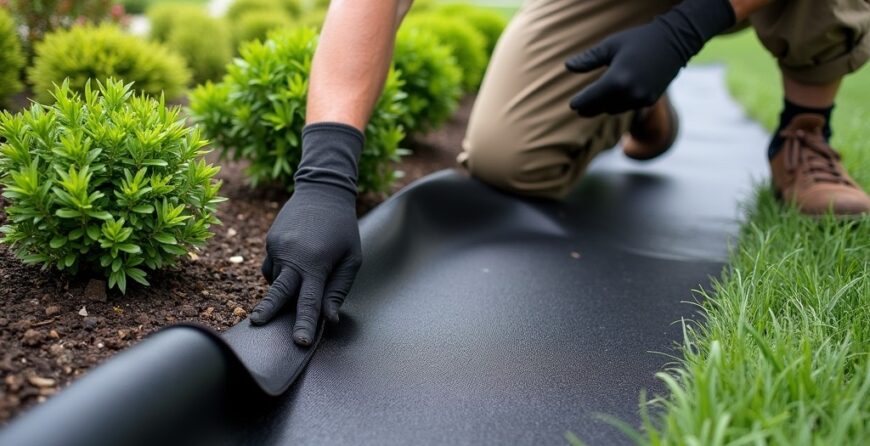
During my three decades as a landscape contractor in Durham, NC, I’m frequently asked “what is landscape fabric?” and “does landscape fabric work?” Since founding Leisure Landscapes in 1993, our team has installed thousands of yards of landscape fabric across the Triangle area, and I can definitively say that when properly used, landscape fabric is an effective tool for long-term weed control.
What Is Landscape Fabric? Understanding the Basics
Landscape fabric, also known as weed barrier or garden fabric, is a permeable synthetic material designed to suppress weeds while allowing water and nutrients to reach plant roots. Many homeowners wonder “does water go through landscape fabric?” – the answer is yes, quality landscape fabric is engineered to allow water infiltration while blocking weed growth. However, its success depends entirely on understanding when, where, and how to use it properly.
At Leisure Landscapes, we’ve earned Merit Awards for Excellence from the North Carolina Nursery and Landscape Association partly because we understand the nuanced applications of materials like landscape fabric. After completing over 6,800 projects, I can confidently say that landscape fabric, when used appropriately, becomes an invaluable component of sustainable landscape maintenance.
What Is Landscape Fabric Made Of? Types and Materials
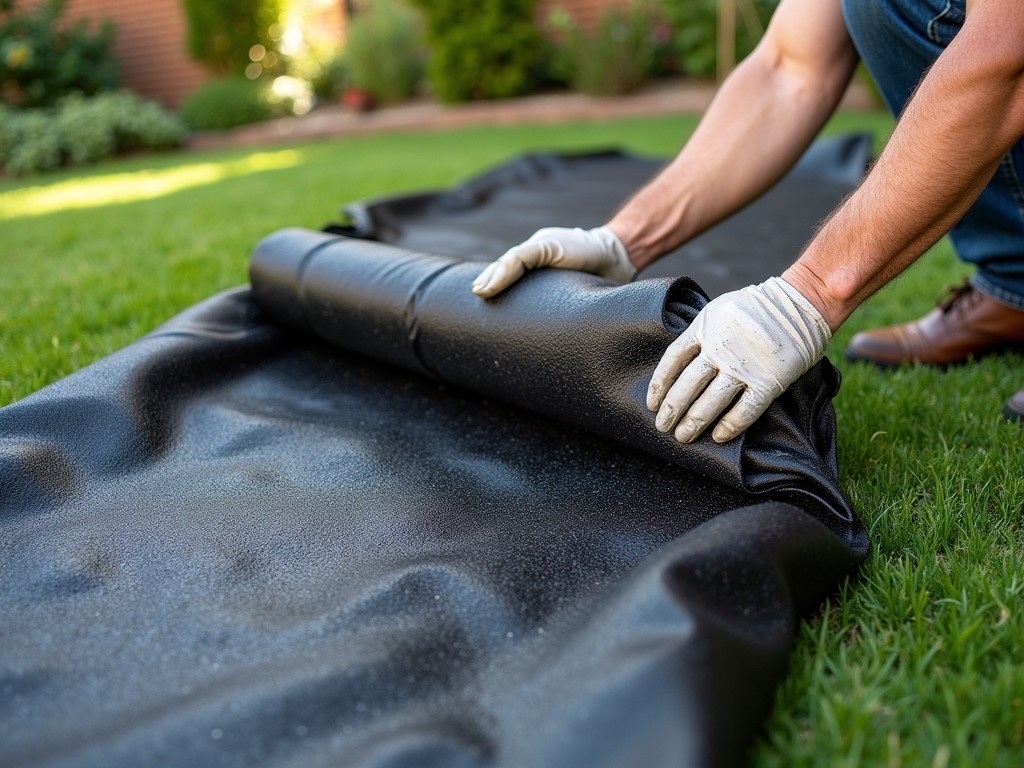
Understanding what landscape fabric is made of helps determine the best application for each type. Through years of testing different products across Durham’s varied soil conditions and climate patterns, we’ve identified the characteristics that determine long-term performance.
Woven landscape fabric consists of polypropylene or polyester fibers woven together to create a strong, durable barrier. This type works exceptionally well when you need to know “should I use landscape fabric under gravel?” – the answer is absolutely yes for gravel pathways, patios, and decorative stone areas where foot traffic and equipment movement require maximum durability. At Leisure Landscapes, we frequently use woven fabric beneath the extensive hardscaping projects we install throughout Durham’s historic neighborhoods.
Non-woven landscape fabric is made from synthetic fibers bonded together without weaving, creating a softer material that’s easier to cut and install around plants. This type typically offers better water infiltration, addressing the question “does landscape fabric let water through?” – non-woven varieties allow excellent water penetration while maintaining weed suppression.
Perforated plastic sheeting, while technically not fabric, is sometimes marketed as landscape fabric. In my professional opinion, this material should be avoided in most landscaping applications. Plastic prevents proper air and water exchange, leading to anaerobic soil conditions that damage plant health—something we’ve observed repeatedly when renovating landscapes where plastic was previously installed.

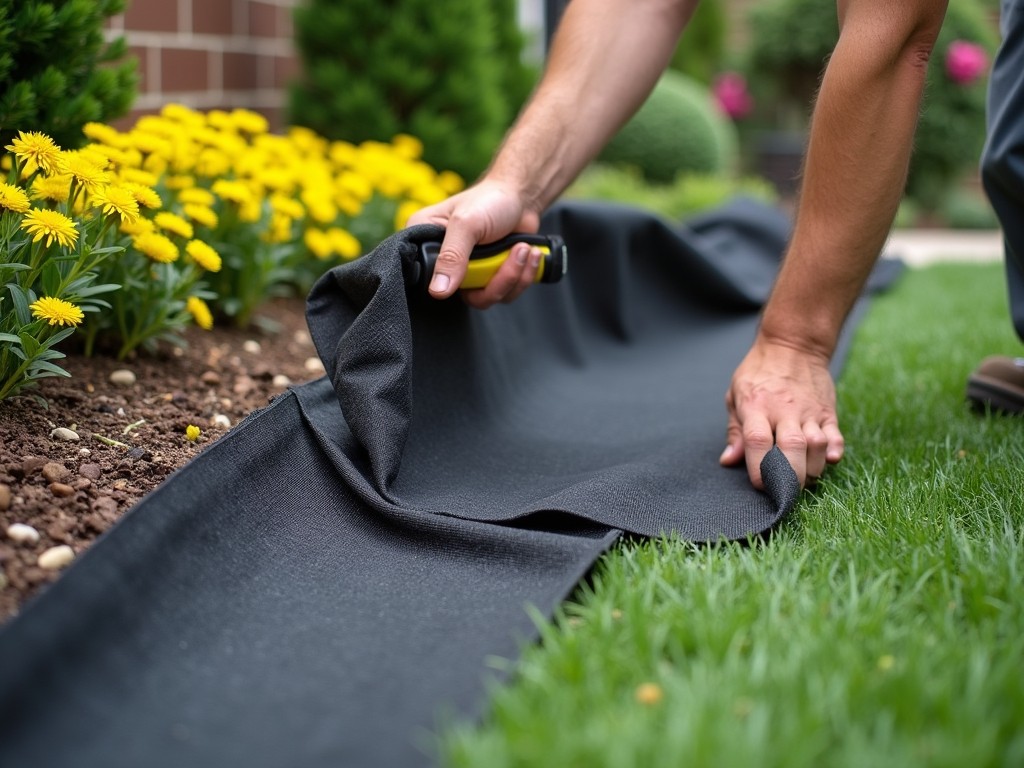
How to Lay Landscape Fabric: Step-by-Step Installation
Learning how to install landscape fabric properly is crucial for long-term success. Having trained countless team members at Leisure Landscapes in proper installation methods, I can attest that shortcuts during installation invariably lead to problems later.
Site preparation is the first step in how to lay landscape fabric correctly. Many homeowners ask “can you put landscape fabric over grass?” – while technically possible, this approach typically fails. Instead, existing vegetation should be completely removed, including roots of perennial weeds. The question “will landscape fabric kill grass?” has a complex answer – while fabric may eventually kill some grass through light deprivation, established grass roots often push through fabric over time.
Soil grading and amendment should be completed before fabric installation. Once fabric is in place, soil improvement becomes nearly impossible without complete removal and reinstallation. At Leisure Landscapes, we typically incorporate organic matter and address drainage issues during the preparation phase, ensuring optimal growing conditions for plants that will be installed through the fabric.
How to secure landscape fabric properly involves overlapping edges by at least 6 inches, with seams running perpendicular to slopes to prevent erosion. We use landscape staples every 3-4 feet along edges and seams, with additional securing in areas subject to wind or foot traffic. Proper securing prevents fabric shifting and weed breakthrough.

Plant Installation and Garden Applications
One common question is “how to use landscape fabric in vegetable garden” situations. In my professional experience, using fabric in vegetable gardens creates more problems than benefits. These areas require regular soil cultivation and plant replacement that makes fabric impractical. For vegetable gardens, I recommend what to use instead of landscape fabric – organic mulches, cardboard barriers, or intensive planting that naturally suppresses weeds.
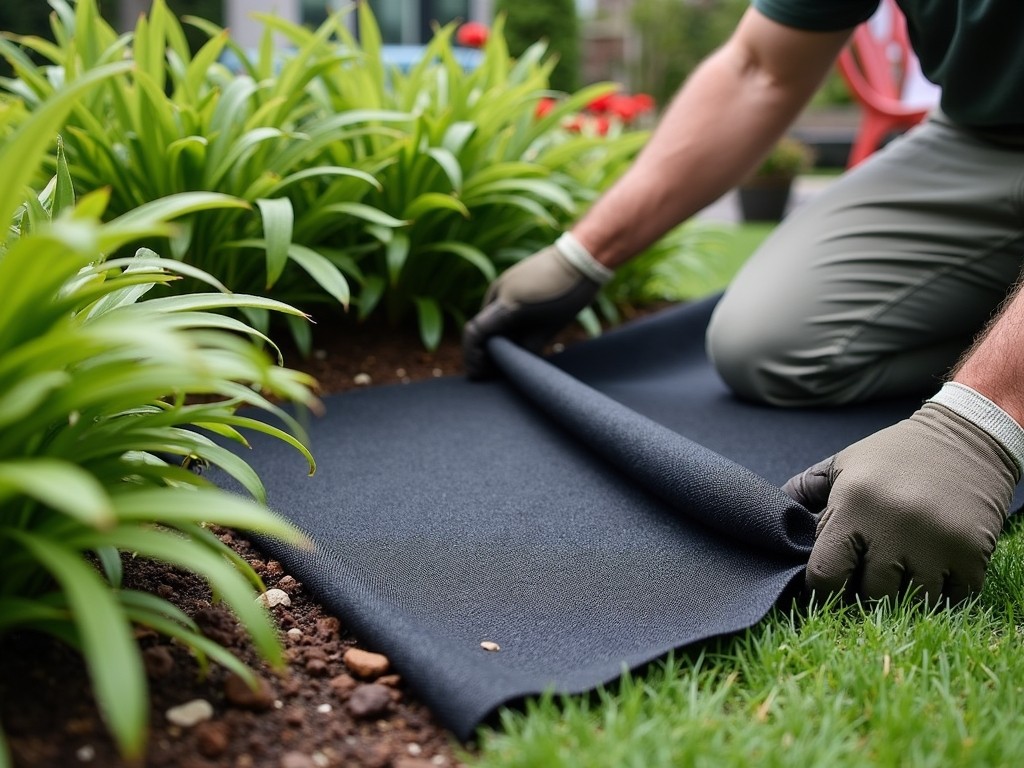
For permanent landscape plantings, proper plant installation through fabric requires precision. We use sharp utility knives or specialized fabric scissors to create X-shaped cuts just large enough for root balls. The cut should extend approximately 2 inches beyond the root ball diameter to allow for initial establishment without restricting growth.
Plant selection becomes more critical when using landscape fabric, as future plant relocation or garden redesign becomes significantly more difficult. At Leisure Landscapes, we work closely with clients during the design phase to ensure plant placement will meet long-term landscape goals, considering mature sizes and growth habits that might affect fabric performance over time.
Should I Use Landscape Fabric Under Gravel? Best Applications
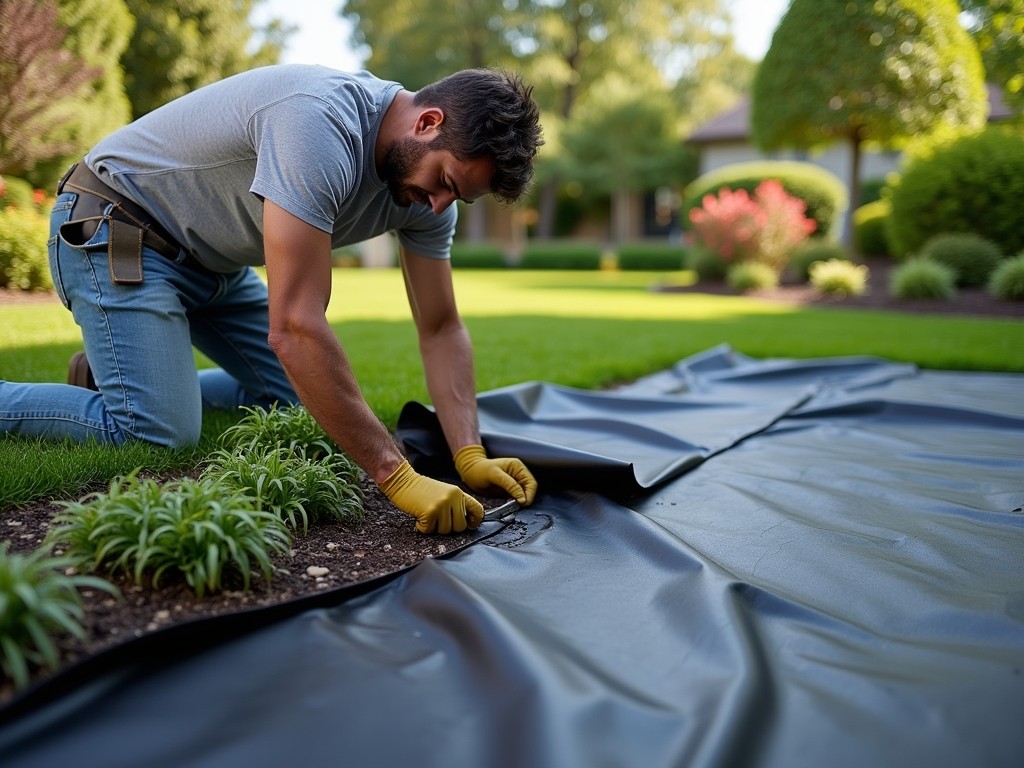
The question “should I use landscape fabric under gravel?” is one I hear frequently, and the answer is a resounding yes for most applications. Landscape fabric under gravel prevents weeds from growing up through decorative stone while allowing proper drainage. This combination creates virtually maintenance-free hardscaping that can last for decades.
For gravel pathways, patios, and decorative stone areas, woven landscape fabric provides the durability needed to withstand foot traffic and equipment movement. Many of our award-winning landscape installations throughout Durham feature this combination in areas where we want permanent, low-maintenance solutions.
When installing fabric under gravel, ensure the fabric is properly secured and any cuts for plants or utilities are sealed to prevent weed breakthrough. The gravel layer should be 2-3 inches deep to provide adequate coverage while allowing proper water infiltration.
Does Landscape Fabric Work? Addressing Common Concerns
Through decades of landscape maintenance for our 250+ ongoing clients throughout Durham and the Triangle, I can definitively answer “does landscape fabric work?” – yes, when properly installed and applied to appropriate situations. However, understanding its limitations is equally important.
Landscape fabric works best for permanent plantings with stable plant populations. It’s highly effective under hardscaping, around foundation plantings, and in areas where long-term weed suppression justifies the installation effort. The key is matching the application to the material’s strengths.
Common failures occur when fabric is installed in inappropriate locations or with poor technique. Installing fabric in areas with established tree roots typically fails because roots eventually grow through and displace the material. Large tree roots near the surface make proper installation nearly impossible and often damage the fabric within a few growing seasons.

What to Use Instead of Landscape Fabric: Alternative Solutions
Knowing what to use instead of landscape fabric is important for situations where fabric isn’t appropriate. Professional judgment requires understanding when alternative approaches provide better results.
Areas with heavy leaf drop from deciduous trees make fabric maintenance challenging, as leaves accumulate and decompose on the surface, creating growing medium for weeds. In these areas, we often recommend thick organic mulch, ground covers, or landscape plantings dense enough to naturally suppress weeds.
Vegetable gardens and annual beds benefit more from organic approaches like cardboard mulching, cover crops, or intensive succession planting. These methods improve soil health while providing weed control without the permanence that makes fabric problematic in frequently cultivated areas.
Slopes steeper than 30% present installation and maintenance challenges that often outweigh fabric benefits. Alternative ground covers, terracing, or erosion control blankets typically provide better solutions for steep areas.

Is Landscape Fabric Worth It? Professional vs. DIY Installation
Many homeowners ask “is landscape fabric worth it?” from both cost and effectiveness perspectives. While landscape fabric installation might appear straightforward, the preparation, material selection, and installation techniques that ensure long-term success require considerable expertise.
At Leisure Landscapes, our installations carry warranties because we understand the details that determine success or failure. Professional installation includes comprehensive site evaluation, soil testing when appropriate, proper material selection for specific conditions, and integration with overall landscape design goals.
For homeowners considering DIY installation, I recommend starting with small, simple areas to gain experience before tackling complex projects. However, for significant installations or areas where mistakes would be costly to correct, professional installation often proves more economical in the long run.
The investment in landscape fabric is typically worth it when properly applied to permanent landscape features, hardscaping applications, and areas where long-term weed suppression provides ongoing value. The key is understanding where fabric excels versus where alternative approaches provide better results.

Securing and Maintaining Landscape Fabric
Understanding how to secure landscape fabric properly is crucial for long-term performance. Inadequate edge securing leads to fabric shifting, weed breakthrough, and premature failure. Wind, foot traffic, and maintenance equipment can displace poorly secured fabric, eliminating its effectiveness and creating safety hazards.
Proper securing techniques include using landscape staples every 3-4 feet along all edges and seams, with additional fastening in high-traffic or windy areas. Overlap all seams by at least 6 inches, and ensure cuts around plants are sealed to prevent weed infiltration.
Long-term maintenance involves periodic inspection for tears, shifts, or areas where organic matter has accumulated on the surface. While landscape fabric significantly reduces weeding requirements, some maintenance is still necessary to remove debris and address any breakthrough weeds.
Water Infiltration and Drainage Considerations
A critical concern for many homeowners is “does landscape fabric let water through?” Quality landscape fabric is designed to be permeable, allowing water and nutrients to reach plant roots while blocking weed growth. However, fabric selection and installation technique significantly impact water infiltration rates.
Non-woven fabrics typically provide better water penetration than woven varieties, making them preferable for planting beds where soil moisture is critical. In Durham’s clay soils, we often create slightly raised planting areas to improve drainage, adjusting fabric installation accordingly to maintain proper water movement.
Proper installation ensures that fabric doesn’t impede natural drainage patterns or create water pooling that could damage plants or property. Our team’s engineering background helps us design installations that work with existing site hydrology rather than against it.
Conclusion: Making Informed Decisions About Landscape Fabric
Landscape fabric represents one tool in comprehensive landscape management, not a universal solution for all weed control needs. When properly selected, installed, and maintained, it can provide years of effective weed suppression while supporting healthy plant growth.
At Leisure Landscapes, we’ve incorporated landscape fabric into hundreds of successful projects throughout Durham and the Triangle area over our 30+ years in business. Our approach emphasizes understanding each property’s specific conditions and client goals to determine whether fabric installation supports overall landscape objectives.
The key questions – does landscape fabric work, is landscape fabric worth it, and should I use landscape fabric under gravel – all have positive answers when fabric is applied appropriately. Understanding how to lay landscape fabric correctly, what to use instead of landscape fabric in inappropriate situations, and how to secure landscape fabric for long-term success ensures optimal results.
Whether you’re planning a new landscape installation or renovating existing beds, the key to landscape fabric success lies in proper application for appropriate situations. For complex projects or when you want to ensure optimal results, consulting with experienced professionals can save time, money, and frustration while delivering the beautiful, low-maintenance landscape you envision for your Durham property.
If you’re considering landscape fabric for your property, Leisure Landscapes offers consultation services to evaluate your specific needs and recommend the most effective approaches for your landscape goals. Our three decades of experience and commitment to excellence ensure that every recommendation supports both immediate objectives and long-term landscape health.